

The Definitive Cannabis Low Stress Training Guide (LST)
If you are looking to maximize your harvest without the risks associated with cutting or topping your plants, you have found the right resource. Low stress training (LST) is widely considered the most accessible, forgiving, and effective technique for cultivators of all skill levels. By gently manipulating the structure of your plant, you can achieve a professional-grade canopy that produces significantly higher yields.
This guide will walk you through everything you need to know about cannabis LST, from the basic biology to a week-by-week execution plan.
What is Low Stress Training (LST)?
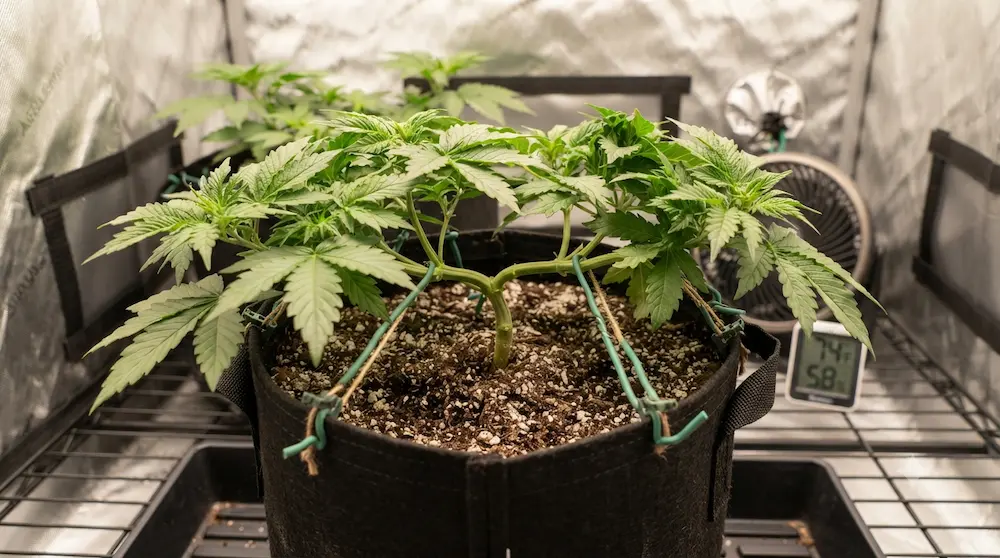
At its core, marijuana low stress training is the art of gently bending and tying down the branches of a cannabis plant to redirect its growth. Unlike high-stress techniques—such as topping or fimming—LST does not involve cutting, slicing, or removing plant tissue.
Instead, it leverages the plant’s natural response to gravity and light, known as phototropism. By breaking the plant's "apical dominance"—the tendency for the main stem to grow straight up and dominate all other branches—you force the plant to distribute energy and growth hormones more evenly.
Why Should You Use LST?
- Increased Yields: By creating an even canopy, every bud site receives the same amount of light, ensuring that "popcorn buds" are minimized and dense, top-shelf flowers are maximized.
- Better Light Penetration: LST spreads the plant horizontally, allowing light to reach the lower nodes that would otherwise be shaded by the large, upper fan leaves.
- Improved Airflow: A wider, bushier plant structure promotes better air circulation through the canopy, which is your best defense against mold, mildew, and stagnant humidity.
- Controlled Height: If you are growing in a closet or a small grow tent, LST allows you to keep your plants short and wide, perfectly fitting your vertical limitations.
When to Start LST on Cannabis
Timing is everything. If you start too early, your seedling might be too fragile. If you start too late, the stems will become "woody" and rigid, making them prone to snapping.
The Golden Rule: Start your cannabis low stress training once your plant has developed 3 to 4 nodes (or sets of true leaves), typically around week 3 from sprout.
Avoid the "Woody" Stage: Once the plant begins its flowering stretch, the stems will harden. Attempting to bend a stiff stem often results in a clean snap. If you are doing cannabis LST correctly, you should be manipulating new, flexible growth, not hardened main stalks.
Essential Gear: What You’ll Need
One of the best things about this marijuana low stress training guide is that it requires very little investment.
- Soft Plant Ties: Avoid string, fishing line, or uncoated wire. These "sharp" materials will slice into the stem as it expands, causing stress or even infection. Use rubber-coated garden wire or soft fabric ties.
- Anchor Points: You need somewhere to tie your branches to. The easiest way is to drill small holes around the upper rim of your plastic grow pot. Alternatively, you can use binder clips clipped to the rim of the pot.
- A Gentle Touch: No tool is as important as your own patience.
How to LST Cannabis: A Step-by-Step Tutorial
Step 1: The Initial Bend
Identify the main stem (the "king" or apex of the plant). Gently roll the stem between your thumb and forefinger to soften the internal fibers—this makes it more pliable. Carefully bend the top of the stem to a 90-degree angle (or as close as you can get without snapping it) toward the edge of the pot. Secure it with a tie.
Step 2: Anchor the Base
When you bend the top, the roots may shift. Secure the base of the stem to the opposite side of the pot to create counter-tension. This keeps the plant stable and ensures that the tension is spread evenly across the root zone.
Step 3: Train the Side Branches
As the plant realizes the main stem is no longer dominant, the side branches will begin to reach upward toward the light. Let them grow for a few days until they are long enough to tie down. Your goal is to guide these branches outward, creating a star-shaped canopy when viewed from above.
Step 4: Maintenance
Low stress training for cannabis is an ongoing process. Because the plant will constantly try to reach for the light, you must check your ties every few days. Adjust them as the branches thicken and grow. If you notice a branch is starting to shade the center, tie it further toward the pot rim.
Find:BudClips for Low Stress Plant Training
Common Mistakes to Avoid
- Starting Too Late: As noted, if you wait until the stems are thick and woody, you are inviting breakage.
- Tying Too Tight: Your plant will double in diameter as it matures. If your ties are too snug, they will become "girdled," strangling the branch and cutting off nutrient flow. Always leave room for the stem to expand.
- Ignoring Recovery: If you hear a "crack," stop immediately! If you do snap a branch, don't panic. Use a piece of tape to splint the wound like a cast. In most cases, the plant will heal itself within a week.
- Training Stressed Plants: Never perform LST on a plant that is already suffering from nutrient deficiency, pest infestation, or overwatering. Training is a mild stressor; always ensure your plant is healthy before you begin.
Can I Use LTS on Autoflowers?
Many beginners ask if it is possible to perform cannabis LTS on autoflowers. The answer is a resounding yes. Because autoflowers have a short, predetermined vegetative phase (usually 3–4 weeks), they don't have time to recover from high-stress techniques like topping.
Because LST is so gentle, it is the perfect technique for autoflowers. It allows you to maximize your yield without stalling the plant’s growth, which is critical when the clock is ticking.