
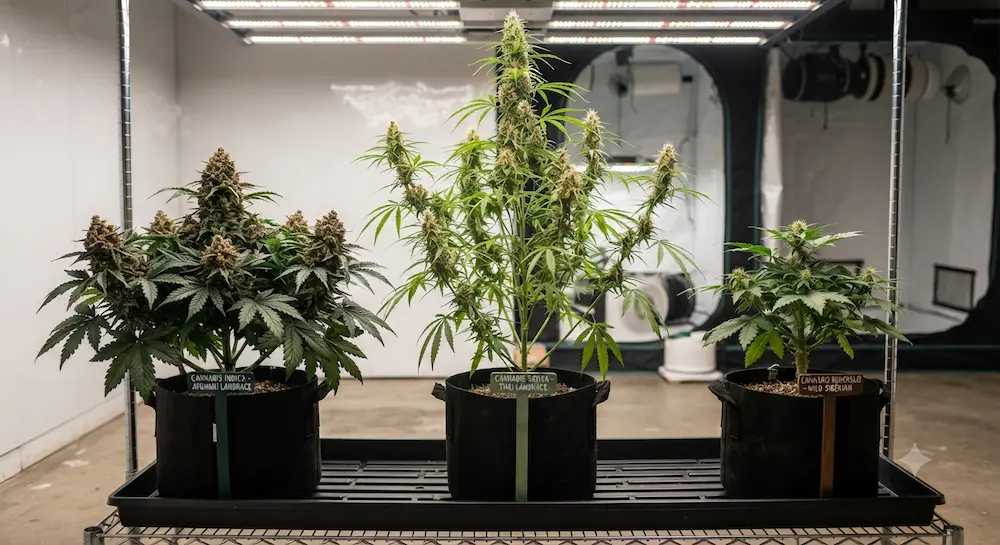

When diving into the world of cannabis, you will frequently hear traditional terms like Indica, Sativa, and Ruderalis. While these classifications remain a staple of dispensary menus and seed bank catalogs alike, understanding what they actually mean requires a look beyond simple labels. Historically used by botanists to describe a plant's physical traits, geographic origins, and growth patterns, these categories have evolved dramatically thanks to decades of modern breeding.
Cannabis Indica: Origins, Structure, and Effects
Originating from the harsh, mountainous regions of Central and South Asia—including Afghanistan, Pakistan, and the legendary Hindu Kush range—Cannabis indica evolved to survive turbulent climates characterized by short summers and freezing winters.
Plant Structure and Growth
- Morphology: Indica plants are typically short, stocky, and bushy, featuring broad, dark green leaves and dense, heavy bud formations.
- Cultivation Benefits: Because of their compact size—often growing only two to four feet tall—and much shorter flowering cycles (roughly 8 to 10 weeks), Indicas are heavily favored by indoor growers managing limited vertical space. Their robust structure allows them to support heavy colas without excessive structural staking.
Effects and Experience
Traditionally associated with a heavy body high—often colloquially referred to as being "in-da-couch"—Indicas are celebrated for deep physical relaxation. Because of these calming, sedative properties, they are commonly chosen for evening use, chilling at home, or unwinding after a long day of physical activity.
Cannabis Sativa: Structure, Climate, and Highs
Cannabis sativa plants trace their historical roots back to hot, dry equatorial and tropical regions across Africa, Central America, and Southeast Asia.
Plant Structure and Growth
- Morphology: In stark contrast to Indicas, Sativa plants grow tall and lanky—sometimes reaching heights of 5 to 15 feet or more outdoors. They feature narrow, finger-like leaves with a lighter green hue and produce longer, lighter, and more airy buds designed to prevent moisture buildup in humid climates.
- Cultivation Challenges: Due to their massive vertical stretch and longer flowering periods (often 10 to 14 weeks), pure Sativas are frequently better suited for outdoor cultivation, greenhouses, or indoor setups that utilize aggressive training techniques.
Effects and Experience
Sativas are typically associated with an uplifting, cerebral "head high". Rather than heavy physical sedation, they tend to provide an energizing, creative boost, making them popular for daytime use, social gatherings, artistic pursuits, and outdoor adventures.
Cannabis Ruderalis: The Wild Subspecies
Cannabis ruderalis is a wild or feral subspecies native to regions with severe, short-summer climates, such as Eastern Europe, Russia, and Central Asia.
Characteristics and The Autoflowering Trait
- Morphology: Ruderalis plants are small, incredibly sturdy, and fast-maturing, rarely growing taller than 12 to 24 inches. They have thick, rough stems and resilient foliage capable of surviving frost and poor soil conditions.
- Chemical Profile: On its own, Ruderalis contains very low levels of THC and higher proportions of CBD, meaning it is rarely consumed strictly for recreational highs. Historically, it has been used in regional folk medicine to address various ailments.
- The Breeding Revolution: Ruderalis possesses a biological superpower that revolutionized modern cultivation: autoflowering. Unlike Indica and Sativa plants—which require a strict change in the light cycle (such as switching to a 12/12 schedule indoors) to trigger flowering—Ruderalis flowers automatically based on its age (usually just 3 to 4 weeks after germination). Breeders regularly cross Ruderalis with elite Indica and Sativa strains to create hardy, fast-finishing autoflowering seeds that thrive in almost any environment.
Modern Hybrids & The Evolution of Strain Breeding
If you look at the modern cannabis market, pure 100% landrace Indicas or Sativas are relatively rare. Over the past few decades, cultivators have aggressively cross-bred different varieties to combine specific desirable traits—such as high THC content, unique terpene profiles, disease resistance, and rapid growth.
These cross-bred plants are classified as Hybrids and are usually labeled on menus as Indica-dominant, Sativa-dominant, or Balanced 50/50. This means a strain's physical appearance or historical lineage might suggest one thing, but its actual chemical output can vary widely. For example, a hybrid strain might grow with a bushy Indica structure but deliver an energetic, Sativa-like cerebral experience.
Beyond Categories: Understanding Chemotypes and Terpenes
While the terms Indica and Sativa remain useful shorthand for plant structure and generalized effects, modern cannabis science emphasizes that chemotypes (the chemical composition of the plant) matter far more than physical appearance.
- Cannabinoids: The primary psychoactive compound is Tetrahydrocannabinol (THC), while Cannabidiol (CBD) offers non-intoxicating, therapeutic properties. Strains can vary wildly in their THC-to-CBD ratios, shifting the entire nature of the consumption experience.
- Terpenes: These are aromatic compounds found in cannabis (and many other plants like lavender, citrus fruit, and pine) that dictate scent and flavor. Terpenes like Myrcene (earthy, sedative) or Limonene (citrusy, mood-enhancing) actively interact with cannabinoids to shape your overall experience—a biological synergy known as the entourage effect.
When choosing a strain—whether for a home grow or consumption—looking past the simple "Indica vs. Sativa" label to examine lab test results, cannabinoid percentages, and terpene profiles will give you the most accurate prediction of what to expect from your flower.